
Why Evening Walks Can Still Overheat Your Dog
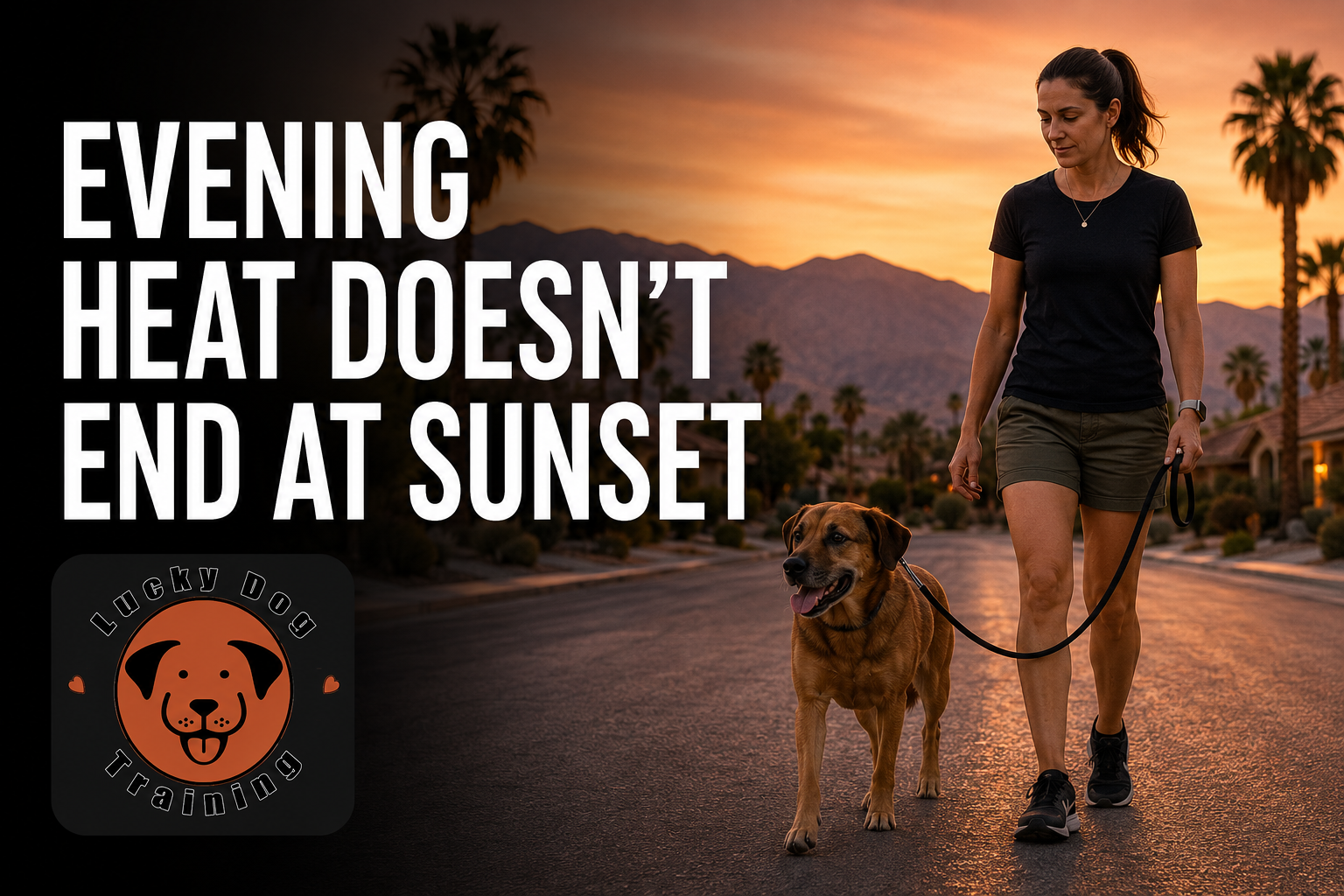
Waiting until evening to walk your dog is usually a sensible choice during a Coachella Valley summer—but “after sunset” does not automatically mean “safe.”
Palm Springs is forecast to reach approximately 101°F today. Following a day of intense sunshine, sidewalks, asphalt, block walls and surrounding hardscape can continue radiating stored heat well into the evening. Air temperatures may also remain high enough to interfere with a dog’s ability to cool effectively.
The result is a deceptive situation: the sun is disappearing, the owner feels more comfortable, but the dog may still be exercising inside a pocket of retained environmental heat.
Darkness Is Not the Same as Cooling
The temperature displayed on your phone measures the surrounding air. It does not tell you how much heat is radiating from the pavement beneath your dog or from the built environment around you.
A sidewalk can remain hot after direct sunlight ends. Asphalt commonly retains even more heat. Walls, artificial turf, gravel and enclosed courtyards can contribute to the heat surrounding a dog’s body.
Dogs also generate additional heat through movement. A dog that begins a walk already excited, pulling, panting or pacing is producing unnecessary physical effort before meaningful exercise has even started.
That is why the safety of an evening walk should be determined by actual conditions and the individual dog—not simply by the time on the clock.
Structure Can Reduce Unnecessary Physical Stress
Balanced training is not only about correcting unwanted behavior. It is also about giving the dog clear direction so they can move through the environment safely and efficiently.
A dog that drags its owner, lunges toward distractions, zigzags across the sidewalk or remains in a highly aroused state uses more energy than a dog walking calmly under guidance.
Before attempting longer outdoor walks:
Seek help from a qualified professional trainer if you cannot safely control your dog around people, animals, traffic or other distractions.
Begin with a calm exit instead of allowing the dog to explode through the doorway.
Use properly fitted equipment appropriate for the dog and handler.
Require a manageable walking position rather than permitting constant pulling.
Interrupt frantic scanning, lunging and unnecessary surging before arousal escalates.
Reinforce calm cooperation while maintaining fair boundaries.
Include brief pauses in safe, shaded locations.
The goal is not robotic movement. It is a dog that can follow direction, conserve energy and remain mentally available to the handler.
Food, praise and access to appropriate sniffing can reinforce good decisions. Leash guidance and fair corrections may also be appropriate when the dog understands the expectation but disregards it. Every tool should be introduced and used correctly for the individual dog.
Do Not Turn Every Walk Into a Mileage Requirement
Owners frequently decide in advance that the dog “needs” a certain distance or amount of time. That mindset can become dangerous when conditions change.
During extreme heat, success may be:
A short, controlled potty walk
Five minutes of structured leash work
A brief shaded sniffing session
Calm engagement exercises near home
Indoor obedience practice
Place work while household activity continues
A short search game inside an air-conditioned space
Physical exhaustion is not the only way to meet a dog’s needs. Training, problem-solving, impulse control and carefully managed scent work can provide meaningful mental activity without forcing the dog through unsafe outdoor conditions.
A responsible handler remains willing to shorten or cancel the planned walk.
Evaluate the Dog You Have Today
Heat tolerance varies considerably. Risk can be greater for:
Flat-faced or short-muzzled dogs
Puppies and senior dogs
Overweight dogs
Dogs with heart or respiratory conditions
Thick-coated dogs
Dogs that are poorly conditioned
Dogs that have not gradually acclimated to the climate
Highly driven dogs that will continue working despite physical strain
A motivated dog may not voluntarily stop. Excitement, drive and environmental stimulation can temporarily override sensible self-regulation.
The handler must make the decision for the dog.
Check Conditions Before Leaving
Before committing to an evening walk:
Check the current temperature rather than relying only on the day’s forecast.
Consider how hot the afternoon became and how recently direct sunlight left the route.
Touch the walking surface and remain alert for retained heat, but do not treat a quick hand test as a complete safety guarantee.
Choose grass, shaded walkways and cooler surfaces where available.
Carry water on anything beyond a very brief outing.
Keep the route close enough to home or your vehicle to end quickly.
Avoid isolated routes where help would be difficult to obtain.
Never assume paw protection makes the surrounding air safe for strenuous exercise.
Boots may help protect paw pads when properly fitted and conditioned, but they do not prevent internal overheating.
Watch Recovery, Not Just Performance
A dog may complete the walk and still struggle to cool afterward. Observe the dog during the outing and throughout the recovery period.
End the activity immediately if the dog develops unusual or escalating panting, excessive drooling, weakness, stumbling, confusion, vomiting, diarrhea or difficulty breathing.
Heat-related illness can progress quickly. Many Vets advises contacting a veterinarian immediately when heat illness is suspected. Veterinary guidance supports moving the dog to a cooler area and using room-temperature or cool—not ice-cold—water while seeking veterinary direction. Ice water and wet blankets can interfere with effective cooling.
Build a Better Desert Routine
Living successfully with dogs in the Coachella Valley requires adaptation. During periods of extreme heat, consider dividing activity across the day:
Complete the primary walk before sunrise when conditions permit.
Use short, purposeful outdoor breaks during hotter hours.
Practice obedience and household manners indoors.
Provide supervised mental enrichment in air conditioning.
Recheck conditions later instead of assuming sunset created a safe window.
Reserve strenuous exercise for genuinely cooler weather.
Consistency does not mean repeating the same routine regardless of conditions. It means consistently making decisions that protect the dog while maintaining expectations, engagement and structure.
A shortened walk is not a training failure. Allowing a dog to rehearse frantic behavior or continue exercising as heat stress develops is not productive conditioning.
Good handling requires judgment.
A Calm Walk Is a Safer Walk
Evening walks can still be valuable during hot weather, but the time of day should never be your only safety measure.
Evaluate the temperature, surface, route, dog and intensity of the activity. Maintain calm structure, recognize early changes in your dog’s movement and breathing, and remain willing to end the outing before the planned distance is complete.
ANYTIME the steps in our blog posts are outside your ability to follow, or you struggle to facilitate them safely, seek direct assistance from a qualified professional. If you suspect overheating or another medical problem, contact a veterinarian immediately.
Go Beyond the Blog
For deeper education, structured challenges, coaching content and ongoing support built around practical, real-world dog training, join Canine Lifestyle on Patreon: