
Why Dogs Shake Off When They Aren’t Wet
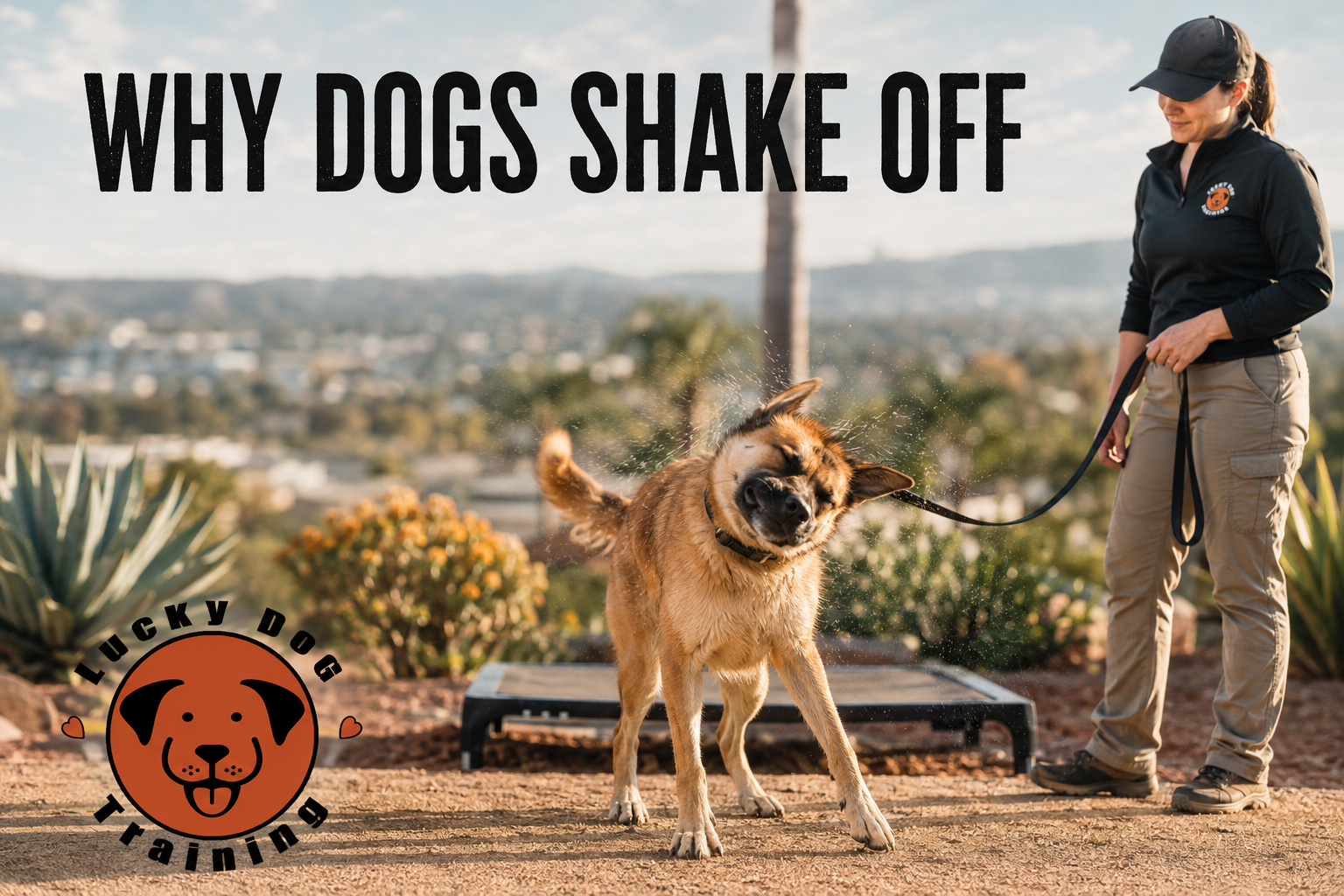
Have you ever watched your dog shake their entire body even though they were completely dry?
This behavior commonly appears after a training exercise, physical handling, an exciting greeting, an uncomfortable interaction, or a moment of uncertainty. Although owners often overlook it, a full-body shake can provide useful information about how a dog experienced the situation that just ended.
It does not automatically mean that something bad happened. It may simply indicate that the dog is releasing physical tension and transitioning into a different state of mind.
A Shake-Off Can Mark a Transition
Dogs frequently shake after:
Completing a demanding training exercise
Being released from a stationary command
Meeting an unfamiliar person or dog
Receiving grooming or physical handling
Experiencing frustration or excitement
Leaving an unfamiliar environment
Recovering from a moment of uncertainty
Settling after appropriately applied training pressure
The shake often appears at the point when the dog recognizes that the previous moment has ended.
A dog may hold a command, work through mild pressure, complete the requested behavior and then shake after being released. That does not necessarily mean the training was harmful. It may mean the dog felt the demands of the exercise, successfully worked through them and is now physically resetting.
Training Pressure Is Not Automatically Harmful
Balanced training recognizes that learning can include reinforcement, boundaries, consequences, physical guidance and appropriately applied pressure.
Pressure is present in everyday life. A leash restricts movement. A closed door prevents access. A place command requires a dog to remain in position instead of following every impulse. Even waiting before walking through a doorway introduces a form of pressure because the dog cannot immediately do what they want.
The important questions are:
Was the training pressure fair?
Did the dog understand how to respond?
Was the dog given a clear path to success?
Was the pressure released at the correct moment?
Did the dog recover normally afterward?
Is the dog becoming more confident and reliable over time?
Training should not leave a dog confused, overwhelmed or afraid of the handler. However, avoiding every moment of frustration or discomfort does not adequately prepare dogs to function in the real world.
Dogs benefit from learning that they can remain composed, follow direction and successfully work through manageable challenges.
Read the Entire Dog—not One Behavior
A shake-off should never be interpreted in isolation.
Look at what happened immediately before and after it.
A dog that shakes and then returns to a relaxed posture, willingly reengages with the handler or calmly continues the activity has probably completed a normal transition.
A dog that shakes and then displays persistent avoidance, frantic movement, tucked posture, repeated escape attempts or an inability to recover may be communicating that the situation was too difficult or poorly understood.
Consider the complete picture:
Is the dog’s body becoming loose again?
Can the dog respond to a familiar command?
Does the dog willingly remain near the handler?
Is breathing returning to normal?
Can the dog settle?
Is the dog ready to continue working?
Good training decisions come from observing patterns—not assigning a fixed meaning to one movement.
What a Shake-Off Can Teach the Handler
A shake-off gives the handler an opportunity to evaluate the previous interaction.
Ask yourself:
Did I communicate the command clearly?
Was my timing accurate?
Did I release pressure immediately when the dog complied?
Was the correction appropriate for this dog and situation?
Did I recognize and reinforce the correct response?
Did I ask for too much too quickly?
Did the dog finish the exercise with greater understanding?
Balanced training is not simply about using rewards and corrections. It is about knowing what the dog needs, communicating fairly and applying each tool with purpose.
A correction without instruction creates confusion. Reinforcement without boundaries can create dependence, selective compliance or uncontrolled behavior. Effective training uses the appropriate combination for the individual dog.
Should You Stop Training When Your Dog Shakes?
Not necessarily.
A single shake does not automatically mean the session should end. Pause briefly and evaluate the dog.
If the dog recovers, remains engaged and understands the exercise, you may continue with an achievable repetition. Completing one clear, successful repetition can help the dog finish with confidence and understanding.
If the dog remains overwhelmed, simplify the exercise. Reduce the environmental difficulty, shorten the duration, create more distance from the distraction or provide clearer guidance.
The goal is not to remove every challenge. The goal is to present challenges the dog can successfully work through.
Know the Difference Between a Reset and a Medical Concern
A situational full-body shake is different from persistent trembling or repeated head-shaking.
Contact your veterinarian when shaking is frequent, unexplained or accompanied by:
Repeated head-shaking
Ear scratching, redness, odor or discharge
Sensitivity when touched
Loss of balance
Weakness or unusual movement
Vomiting or signs of nausea
Persistent trembling
Sudden behavioral changes
Apparent pain
Repeated head-shaking can be associated with ear irritation or infection, while trembling may have medical causes unrelated to training or behavior.
Better Observation Creates Better Training
Dogs communicate continuously, but their communication must be considered within context.
A shake-off is not proof that training was too difficult, nor should it automatically be dismissed. It is one piece of information that can help you evaluate the dog’s understanding, emotional state and ability to recover.
Fair balanced training teaches dogs how to respond to both rewards and boundaries. It creates clarity, builds resilience and helps dogs function successfully beyond the controlled environment of the home.
ANYTIME the steps in our blog posts are outside your ability to follow, or you struggle to facilitate them safely, seek direct assistance from a qualified professional trainer. Proper observation, timing and application matter—especially when training pressure, corrections or behavioral concerns are involved.
Go Beyond the Blog
Want more practical guidance rooted in real-world, balanced dog training?
Join Canine Lifestyle on Patreon for structured challenges, expanded training education, demonstrations and ongoing coaching designed to help you better understand and guide your dog.