
Back-to-School Routine Changes: Helping Your Dog Stay Calm When Left Alone
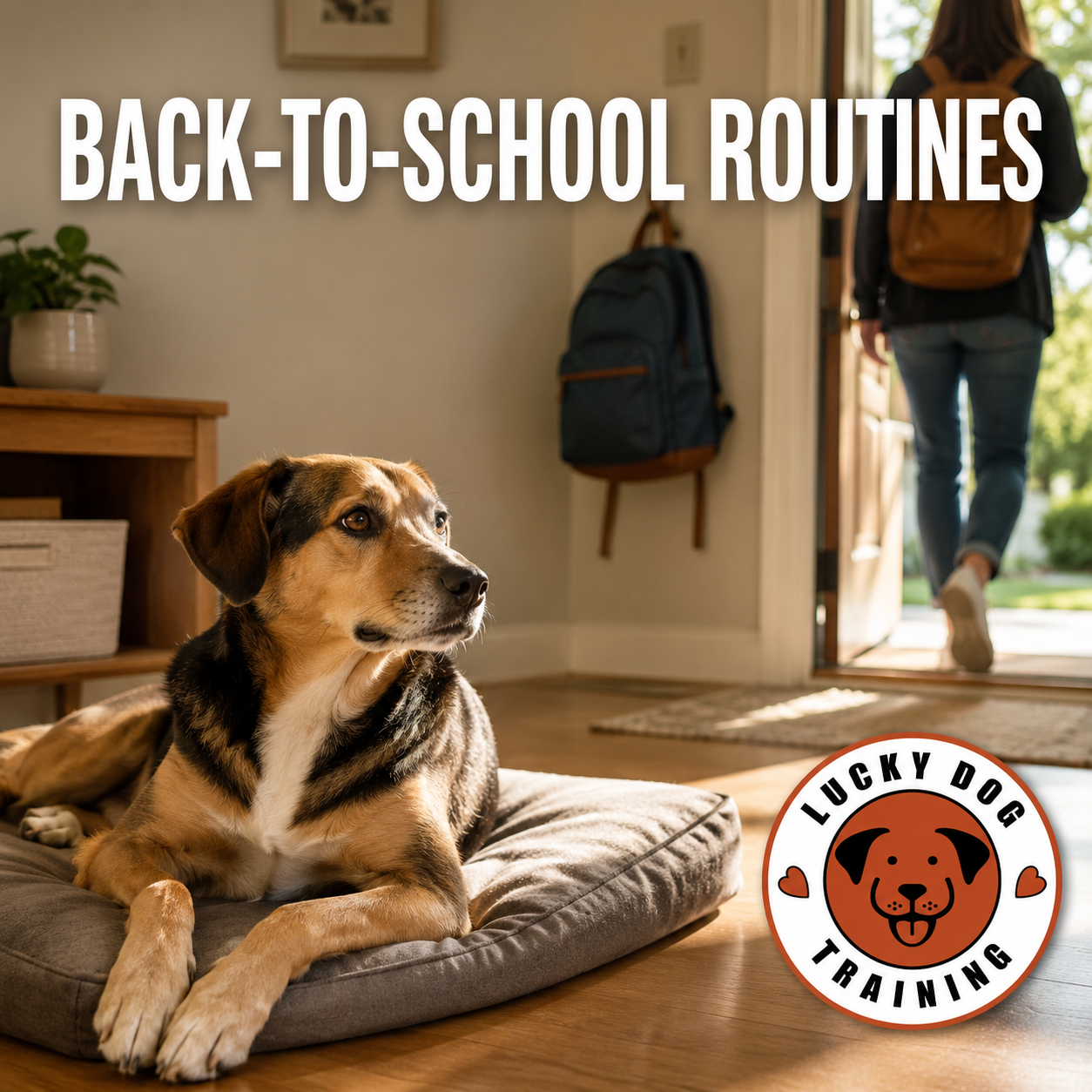
When school resumes and work schedules tighten, the household can change almost overnight. Children who were home throughout summer leave early. Morning activity becomes rushed. Midday company disappears. Walks, meals, and attention may happen at different times.
Your dog notices every part of that change.
Some dogs adjust with little difficulty. Others begin following family members from room to room, barking after departures, scratching at doors, having accidents, chewing household items, or becoming frantic when backpacks, keys, or shoes appear.
These behaviors are often described as “acting out,” but they may reflect a dog who has not learned how to settle when the family’s routine changes.
The answer is not to wait for the first full school or workday and hope the dog figures it out. Calm independence is a skill—and it can be practiced.
Routine regression is not always separation anxiety
A dog who is bored, under-stimulated, or surprised by a schedule change may bark or chew without experiencing clinical separation anxiety.
A dog in genuine distress may panic soon after departure and display several signs together:
Persistent barking, whining, or howling
Heavy panting or drooling
Escape attempts
Destruction around doors or windows
Refusal to eat while alone
House soiling despite being reliably trained
An inability to settle at any point during the absence
Use a camera when possible. What happens during the first 15 to 30 minutes after you leave can provide valuable information.
A dog who investigates a food toy and then sleeps needs a different plan from a dog who cannot eat, repeatedly tries to escape, or remains highly distressed.
Severe or sudden behavior changes also deserve veterinary attention. Pain, digestive problems, urinary conditions, cognitive changes, and other medical problems can resemble training issues.
Start rebuilding independence before long absences
Practice while you are still home.
Ask your dog to settle on a defined bed or Place while you move around the room, prepare a meal, answer email, or briefly step out of sight. Reward a relaxed body, quiet behavior, and the ability to remain there without constant physical contact.
The goal is not to make affection scarce. It is to teach your dog that being near you and being separate from you are both normal.
Increase the difficulty gradually:
Begin with a few seconds of separation behind a gate or doorway.
Return while the dog is still capable of remaining calm.
Vary the duration so every repetition does not become predictably harder.
Practice at different times of day.
Progress from in-home separation to very short departures outside.
If your dog becomes frantic, the exercise was too difficult. Reduce the duration and rebuild from a level the dog can complete successfully.
Make departure cues less emotionally powerful
Dogs quickly learn that keys, shoes, backpacks, lunch bags, or a particular jacket predict a long absence. When those cues only appear before you leave, they can trigger anxiety before the door opens.
Occasionally pick up your keys and sit down. Put on your shoes, then make coffee. Move a backpack and remain home.
These neutral repetitions can prevent ordinary household actions from becoming reliable alarm signals.
Keep actual departures and arrivals calm. A long, emotional goodbye can tell an uncertain dog that something significant is about to happen.
When you return, greet your dog warmly, but wait for a calmer body before turning the reunion into a major event.
Create a predictable morning routine
Predictability helps many dogs settle. A practical back-to-school routine might include:
A bathroom break and appropriate exercise during the coolest safe part of the morning
A few minutes of structured obedience or Place work
Breakfast delivered through an appropriate food puzzle
A short calm period before departure instead of frantic last-minute play
A planned midday bathroom break if the absence exceeds what the dog can comfortably manage
Exercise can support calmer behavior, but exhaustion is not a cure for anxiety. Your dog must also learn the actual skill of settling alone.
Use confinement carefully
A crate, pen, gated room, or dog-safe area can prevent destructive rehearsals, but the correct setup depends on the individual dog.
A dog who already relaxes in a crate may find it reassuring. A dog who panics and tries to escape confinement can injure their teeth, nails, or paws.
Do not use a crate as a test of willpower. Build positive confinement separately and use the least restrictive safe option that allows your dog to settle.
Remove collars and equipment that might catch while the dog is unsupervised, and choose enrichment items appropriate for your dog’s size and chewing habits.
Mistakes that can make the problem worse
Punishing destruction or accidents after returning home
Moving from constant summer companionship to a full day alone without practice
Assuming another dog will cure separation anxiety
Increasing freedom or absence duration faster than the dog can handle
Treating barking as disobedience without investigating its cause
Confusing temporary silence with genuine relaxation
Delayed punishment cannot teach your dog what to do differently. Added stress can make future departures even harder.
When professional training can help
Professional guidance is valuable when your dog:
Cannot progress beyond very short absences
Repeatedly destroys property
Vocalizes long enough to affect neighbors
Eliminates specifically when left alone
Becomes unsafe in confinement
Cannot settle despite gradual practice
Lucky Dog Training develops practical obedience, calm Place behavior, household structure, and real-world reliability through Private Lessons, Day Training, Train and Play, and Extended Training programs.
The best part: We provide Follow-Up Sessions AT YOUR HOME no matter which training program you choose. This helps your dog transfer the new skills into the environment where departures actually happen.
If your dog is struggling with a back-to-school or work-schedule change, schedule an introductory call through LuckyDogTrainingPS.com.
Lucky Dog Training serves The Coachella Valley and clients throughout Southern California, including Riverside, San Diego, and Los Angeles counties.
If you or someone you know needs practical help creating a calmer, more reliable dog, please share Lucky Dog Training.